

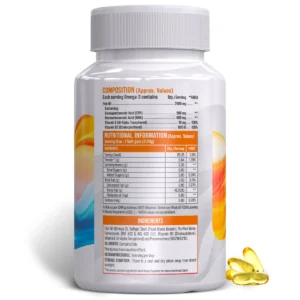
Fish oil is a popular supplement packed with omega-3 fatty acids, which are essential for good health. If you don’t eat oily fish like mackerel, tuna, or herring regularly, a fish oil supplement can help you get the omega-3s your body needs.
These fatty acids, especially eicosapentaenoic acid (EPA) and docosahexaenoic acid (DHA), offer more health benefits than plant-based omega-3s like alpha-linolenic acid (ALA). About 30% of fish oil is omega-3s, along with vitamins A and D.
Since many Western diets lack enough omega-3s, supplementing with fish oil can support heart, brain, and joint health, making it an easy and effective way to boost your nutrition.
Key Takeaways
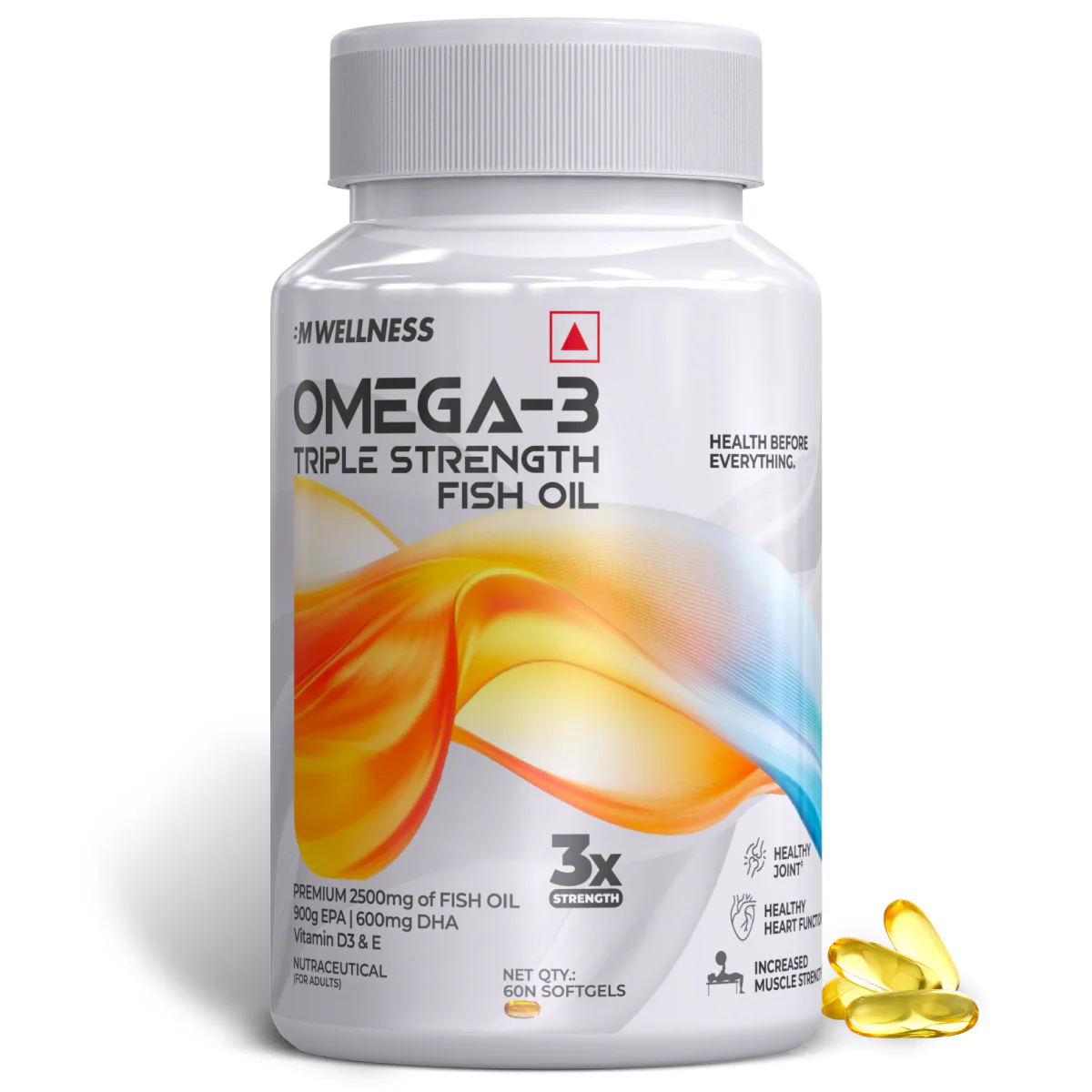
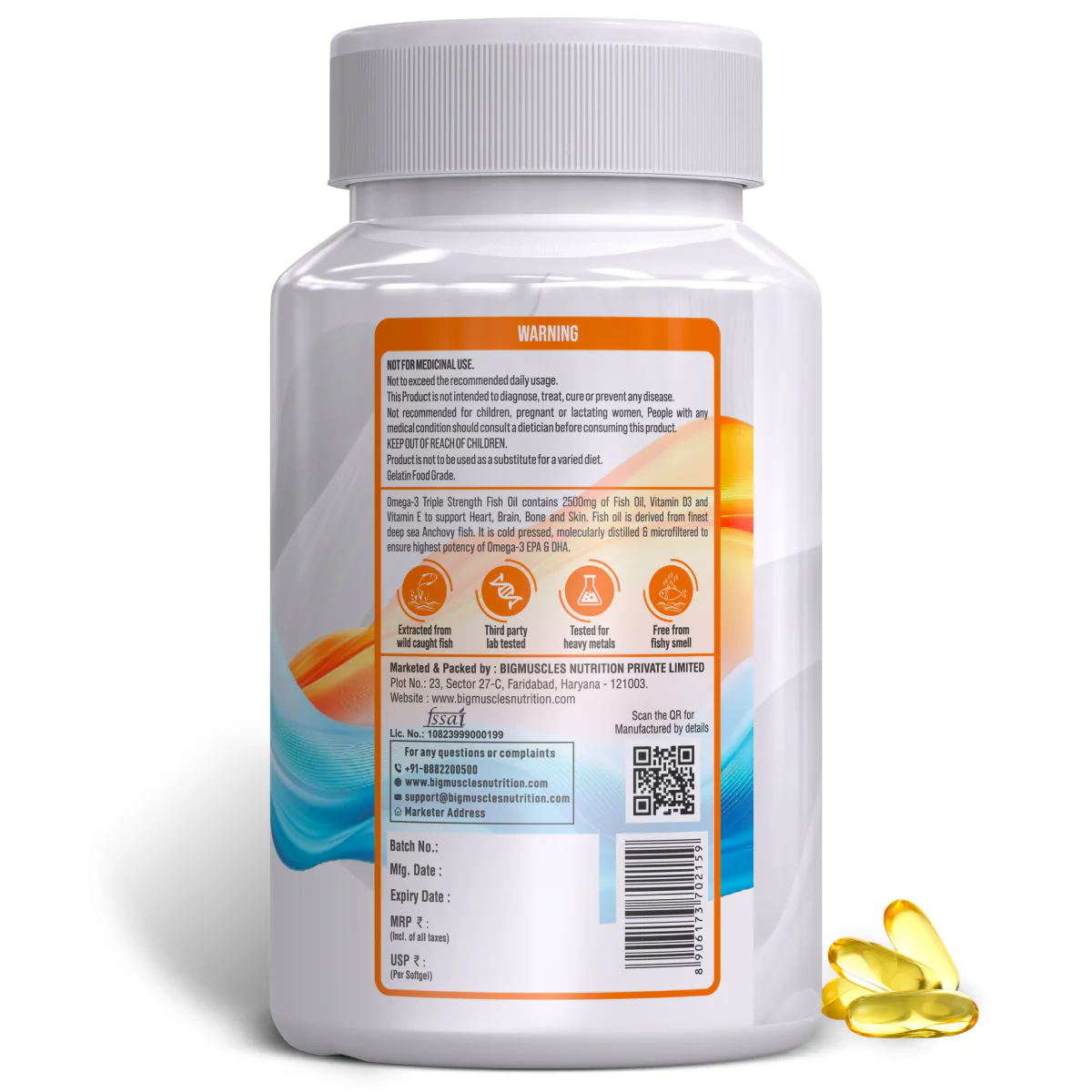
Fish Oil delivers high-quality Omega 3 fatty acid capsules for optimal health benefits.
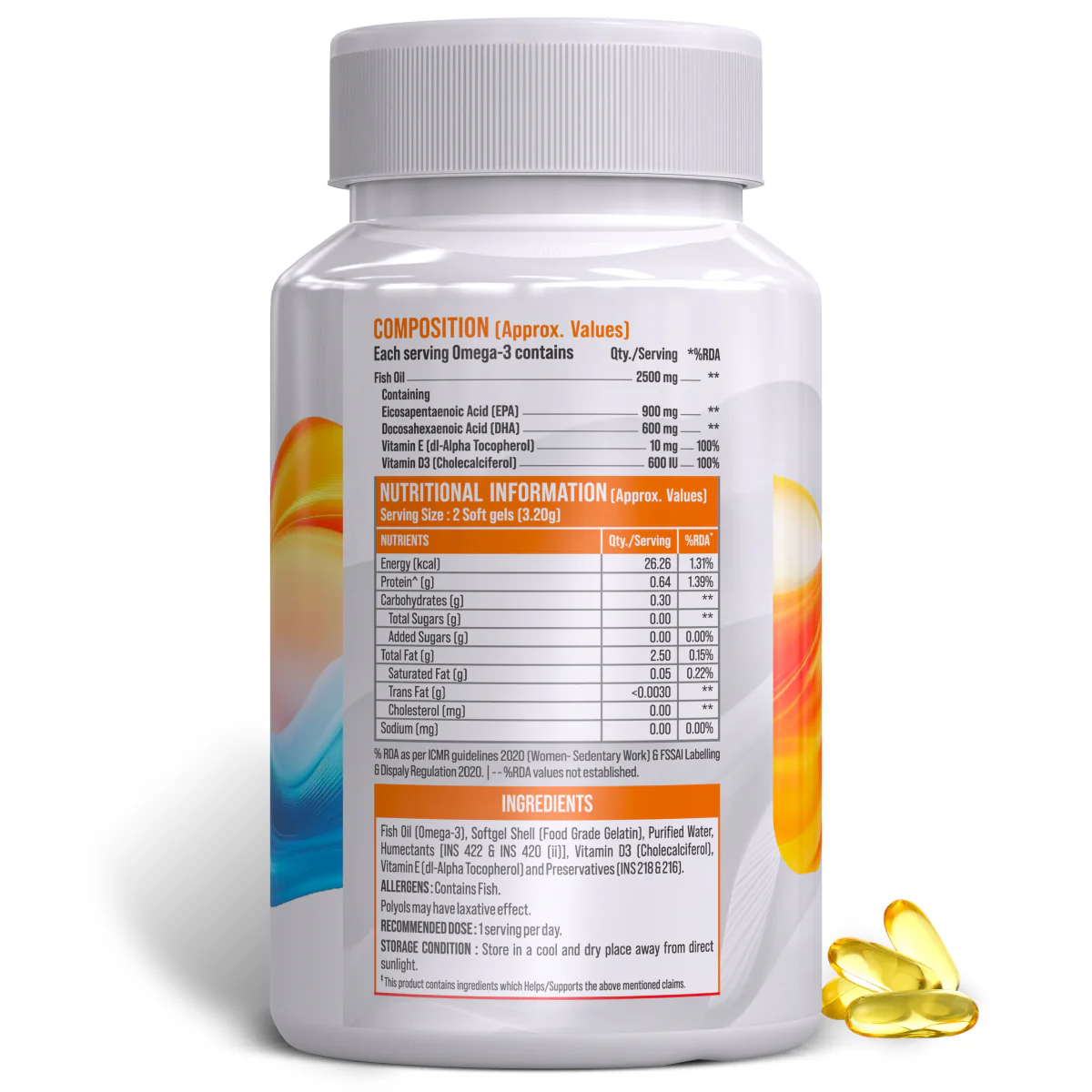
Each serving of Omega 3 capsules provides 2500 mg of fish oil, with 900 mg of EPA and 600 mg of DHA, crucial for heart and brain health.
Enhanced with Vitamin E and Vitamin D3 for additional wellness benefits.
This Omega 3 supplement supports heart health, boosts cognitive function, and promotes joint flexibility.
Good for Heart Health
Research consistently supports the idea that omega-3 fatty acids from fish oil can lower the risk factors for heart disease. Key studies include:
The GISSI-Prevenzione Trial (1999) found that omega-3 capsules significantly reduced mortality and the incidence of major cardiovascular events in patients after a heart attack.
A 2013 meta-analysis in JAMA Internal Medicine concluded that omega-3s from fish oil reduce triglyceride levels and lower blood pressure, thus contributing to heart health.
A 2021 systematic review published in Circulation emphasized moderate evidence of omega-3s in reducing cardiovascular disease mortality but called for more trials to confirm benefits for stroke prevention.
Help Treat Schizophrenia and Depression
The connection between omega-3 and mental health is well-supported by these research:
A 2019 meta-analysis published in Translational Psychiatry found that omega-3 capsules improved symptoms of depression and may prevent the onset of depressive disorders.
A 2020 review in Psychiatry Research highlighted how omega-3s, particularly DHA and EPA, are linked to brain function and mental health, showing reduced symptoms in conditions like schizophrenia and depression.
Support Eyesights
Evidence linking omega-3 with eye health is compelling, particularly in the prevention of age-related macular degeneration (AMD):
A 2008 study in Ophthalmology suggested that increased dietary intake of omega-3 fatty acids is associated with a reduced risk of AMD.
However, research on fish oil supplements specifically for AMD has been mixed. A 2013 study in JAMA Ophthalmology reported no conclusive benefit of fish oil supplementation for AMD prevention, despite positive results from dietary fish intake.
Reduce Inflammation
Fish oil’s anti-inflammatory properties are:
A 2018 review in The American Journal of Clinical Nutrition found strong evidence that omega-3s reduce inflammation markers, which could be beneficial in conditions like rheumatoid arthritis and inflammatory bowel disease (IBD).
Specifically, a study from 2017 in Arthritis and Rheumatology showed that fish oil supplements reduced joint pain and stiffness in people with rheumatoid arthritis.
Support Healthy Skin
The role of omega-3 in skin health has been explored in various studies:
A 2014 study in The Journal of Lipid Research found that omega-3s could help alleviate symptoms of psoriasis and dermatitis.
Another study from 2015 highlighted the role of fish oil capsules in improving skin hydration and preventing UV-induced skin damage.
Support Pregnancy and Early Life
Omega-3 intake is crucial during pregnancy for fetal development:
A 2018 systematic review in Nutrients concluded that omega-3 capsules during pregnancy may support better cognitive and visual development in infants.
A 2020 study in The Lancet further emphasized the potential benefits of omega-3 in preventing childhood allergies and supporting early development.
Reduce Liver Fat
Research supports omega-3’s role in improving liver health:
A 2014 meta-analysis in The Journal of Clinical Gastroenterology found that omega-3 fish oil capsules reduced liver fat in patients with non-alcoholic fatty liver disease (NAFLD).
A 2021 study confirmed that fish oil could help alleviate symptoms of NAFLD by reducing liver inflammation and fat accumulation.
Improve Attention and Hyperactivity in Children
Fish oil supplementation has shown promise in treating ADHD:
A 2018 study in The Journal of Attention Disorders found that omega-3 supplementation significantly improved inattention and hyperactivity in children with ADHD.
Research from 2020 highlighted the potential for omega-3 to reduce impulsivity and aggression in children with ADHD.
Help Prevent Symptoms of Mental Decline
Fish oil has potential cognitive benefits for older adults:
A 2023 meta-analysis of 48 studies in Ageing Research Reviews found that omega-3 capsules could reduce the risk of dementia and age-related cognitive decline by as much as 20%.
A 2015 study in Neurobiology of Aging suggested that omega-3 supplementation might slow down the cognitive decline associated with Alzheimer’s disease.
Improve Asthma Symptoms and Allergy Risk
Fish oil’s role in reducing asthma symptoms is promising:
A 2019 study in The American Journal of Respiratory and Critical Care Medicine found that omega-3 supplementation improved lung function and reduced asthma-related inflammation.
A 2021 study further confirmed that omega-3 fatty acids may help reduce the severity of asthma symptoms and decrease the need for medication.
#fitness&proteins